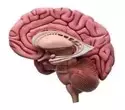
For decades, the scientific community has largely viewed the cerebral cortex, the brain's center for higher functions like thought and perception, as a secondary player in the initiation of sleep. Traditional theories posited that deeper brain structures were primarily responsible for governing our sleep-wake cycles, with the cortex merely following their lead. However, groundbreaking research led by Dr. Renata Batista-Brito at the Icahn School of Medicine at Mount Sinai is now challenging this long-held perspective. Her team's recent discoveries indicate that the cortex is far from passive; instead, it actively contributes to the process of falling asleep through a unique and previously underappreciated population of neurons.
The pivotal finding of this study centers on an extremely rare class of neurons named Sst-Chodl neurons. These neurons constitute a mere 0.2% of the total neuronal population within the cortex, yet they possess an extraordinary capacity to synchronize neural activity across vast cortical regions. Unlike most inhibitory neurons that exert their influence locally, Sst-Chodl neurons project signals over long distances, positioning them to orchestrate widespread changes in brain activity. The research revealed that these neurons remain largely dormant when an animal is awake and alert. However, as drowsiness sets in and the brain transitions into deep non-rapid eye movement (NREM) sleep—a phase characterized by relaxed physiological states and distinctive slow, synchronized brain waves—Sst-Chodl neurons become remarkably active. This activation coincides precisely with the cortex adopting the characteristic rhythmic patterns associated with sleep, suggesting a more proactive role than previously imagined.
To further investigate their function, researchers conducted experiments where these Sst-Chodl neurons were artificially activated. The results were compelling: electrical signals throughout the neocortex became notably slower and more synchronized, mirroring the brain patterns observed during natural sleep. Critically, this induced activation was sufficient to hasten the onset of sleep in mice and significantly extend their total sleep duration. This evidence strongly suggests that Sst-Chodl neurons are not merely indicators of sleep but active drivers of the transition into it. The evolutionary persistence of these neurons across diverse species, from amphibians to humans, for hundreds of millions of years, despite their scarcity, underscores their profound importance. This remarkable conservation highlights a fundamental, yet previously unknown, role in brain function that has been maintained over vast evolutionary timescales.
The implications of this discovery are far-reaching. One intriguing hypothesis that the research team aims to explore is whether Sst-Chodl neurons play a role in detecting and enforcing the brain's physiological need for sleep. As an organism remains awake, sleep pressure steadily accumulates, eventually necessitating a period of rest. It is conceivable that these specialized cortical neurons act as a sensor or a mediator for this intrinsic sleep drive, guiding the cortex towards a sleep state when fatigue reaches a critical threshold. Understanding this mechanism could unlock new insights into the fundamental processes that govern sleep homeostasis. Furthermore, given that sleep disturbances are a common feature of numerous neurological and psychiatric conditions, including Alzheimer's disease and autism spectrum disorder, this research opens critical avenues for investigation. Scientists can now explore whether the dysfunction of Sst-Chodl neurons contributes to sleep pathologies in these disorders, potentially leading to novel diagnostic tools and therapeutic interventions aimed at restoring healthy sleep patterns.